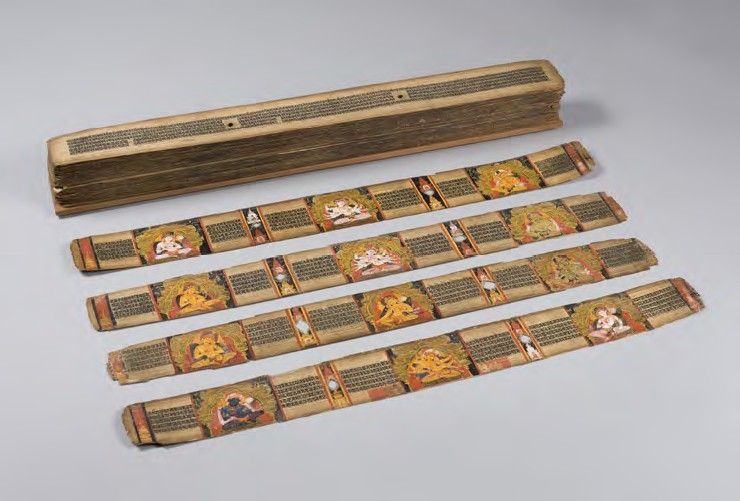
Thor bu - Curiosia Indo-Tibetica

Textual and visual odds and ends from India, Tibet, and around.

My Photo
Name:
Location: Kolozsvár/Cluj, Budapest, Oxford, ibi ubi

Friday, October 19, 2012

Vilāsavajra's Jñānapāda quotation traced

This has been giving me headaches for a while. As already noted by Anthony Tribe in his thesis (The Names of Wisdom. A Critical Edition and Annotated Translation of Chapters 1-5 of Vilāsavajra's Commentary on the Nāmasaṃgīti, with Introduction and Textual Notes, Oxford 1994), Vilāsavajra quotes Jñānapāda in his Nāmamantrārthāvalokinī, but the verse - to the best of my knowledge (but I'm woefully behind with secondary literature) - remains untraced. Here is the śloka in question (given by Tribe on p. 16 from his Ms. B = NGMPP E 360/16, f. 58r):

tathā coktaṃ Jñānapādaiḥ | 

sambodhicittam utpādya mahāmaitrīprayogataḥ | 
sarvadharmā nirātmāna iti jñātvā vimucyata iti ||

A slight correction based on the Cambridge ms. (Add. 1708, f. 81v): mahāmaitrī- rather than mahāmaitrīṃ

I have browsed through most of Jñānapāda's works, but could not find this verse. Well, it turns out I was looking in the wrong place. This is not from Jñānapāda's Tantric works, but from one placed among the Madhyamaka texts in the Tibetan Canon, the Mahāyānalakṣaṇasamuccaya (Tōh. 3905). This is actually the opening verse:

byang chub yang dag sems bskyed pa'i |
byams pa chen po'i sbyor ba ste |
chos rnams thams cad bdag med pa'i |
zhes bya ye shes mngon par brjod || 

Something has gone terribly wrong with the fourth quarter, but on the whole I would call this a good match.


UPDATE: a fragment of the Mahāyānalakṣaṇasamuccaya is extant in Sanskrit, see Yoshiyasu Yonezawa, "Sanskrit Fragment of the Mahāyānalakṣaṇasamuccaya". In: Journal of Research Society of Buddhism and Cultural Heritage No.7, 1998, 36-65. The Japanese scholar notes that the verse was already noted and transcribed by Sāṅkṛtyāyana (1937:40, n. 4). The reading adopted in these publications is iti jñātvā 'dhimucyate. (Thanks to Harunaga Isaacson and Ryugen Tanemura for the article.)

Labels: , , , , , ,

Tuesday, June 21, 2011

Woe unto you, scribes

Another Prajñāpāramitā ms., source here.

I have just finished reading "Bengal, Bihar, Nepal? Problems of provenance in 12th-century illuminated Buddhist manuscripts" published in two parts in Oriental Art, vol. XXXV (1989). In this otherwise extremely well-researched and interesting article J. P. Losty writes the following about an Aṣṭasāhasrikā ms. now held at the British Library (Or. 14268):

Its colophon, however, is worth quoting as it both suggests a date and offers food for intriguing speculations (Fig. 25). The ye dharmā verse is followed (after another verse expressing pious Buddhistic sentiments beginning with lokaṃ prāpayituṃ) by (f. 292v): 
kāle[']smin bahudṛṣṭiśa[=sa]ṅkulakalau pāṭhe [']pi dūraṅgate 
nānābhedam anekapustakagatan dṛṣṭvādhunā śraddhayā 
kupyadvādigajendrakumbhadalane bhadreṇa yā śodhitā 
lokārthaṃ hariṇā mayā parahitaiḥ seyaṃ budhair guphyatāṃ || [[...]] 
Here the pious donation statement breaks off. A literal translation would be: "At this time in the Kali-era of tumult of many view-points, when the establishment of good readings is not possible on account of the many gaps in various books, now let this [MS], which has been edited for the general benefit with faith by me Hari who am skillful in breaking open the temples of enraged elephant-lords of debate, be strung by the well intentioned wise. [[...]]" [[...]]
Although at first sight a personal statement and not a scribal formula, one other manuscript is known to me which contains the identical verse along with its preceding one. This is Grierson MS 1 in the India Office Library, written in a very similar, if not identical, hooked Nepalese script of the same period, but this time with a donor, one Luṃṇībhāro, and with covers illuminated in the Nepalese style of the late 12th century. However, this seems to be the only other occurence of these verses, and I propose for the time being to treat them as personal scribal statements and not as standard formulae. It is difficult otherwise to account for his stating that his name is Hari, which is odd because this is a Hindu name and also because unaccompanied by the usual nāmnā. He also of course has no Buddhist monastic titles to justify his portrayal of himself as a skilled debater in Buddhist councils. Be that as it may, he must logically be either a Nepalese writing either in Nepal or Bihar, or an Indian who had gone to Nepal and adopted a typically Nepalese script. 
As to dating, the scribe's gloomy remarks suggest a period of great upheaval. On palaeographic grounds, a date in the second half of the 12th century or early 13th is most likely by comparison with dated manuscripts using this script. The evidence of the miniatures suggests a date at the end of this period. Both India and Nepal experienced upheavals in the last decade of the 12th century. In Nepal, the so-called Ṭhakurī dynasty had collapsed, three claimants were fighting for the throne, and feudatories from outside the Kathmandu Valley were establishing their independence. [[...]] In India, of course, the Muslim armies swept down the Gangetic plain towards Bihar and Bengal, and the ferocious onslaught was such that the Buddhist monasteries with their great libraries were all destroyed by the early decades of the 13th century. Either event could be referred to by the phrase "in the Kali-era of tumult of many viewpoints," although so apocalyptic a phrase suggests the latter. 
Our scribe tells us that he is a skilled debater, often victorious in the philosophical debates that took place at the great monasteries, and hence we would suppose him to be more than a humble copyist. The image comes irresistibly to mind of this famous debater sitting in the ruins of the library at Nālandā, piecing together from what was available the text of this famous scripture. It would, however, be sounder in fact to resist this image, as we must remember that our scribe is using a Nepalese script. It is difficult to see why a Nepalese scholar would have gone to India at such a time to copy such a well-known text. [[...]] 
We could, however, suppose that our scribe was in Nepal, viewing events in distant India from the still unviolated Kathmandu Valley. But would a Nepalese scribe speak so slightingly of the libraries of the Buddhist vihāras of his own country, so that it was impossible to write the text of so well-known a scripture without recourse to the Indian libraries? This is unlikely. However, if the scribe were an Indian monk who had taken refuge in Nepal and was using a well-established Nepalese script (albeit with backslidings towards Siddhamātṛkā), then his feeling of cultural isolation, running even to peevishness in his final remarks, is perfectly comprehensible. [[...]] 
Another possibility is that our scribe was not actually in the Valley itself, but in one of the towns outside, and hence he thought that it was not possible for him to establish good readings. [[...]] 
No firm conclusions can be drawn as yet about the provenance of this manuscript in the light of the above speculations. However, the most likely seems to be a Nepalese scholar (or possibly an Indian) established temporarily in a town such as Dhulikhel in the period 1190-1200, earning a humble living as a scribe, fulminating about the disasters in both the Valley and India itself, [[...]]
To sum up: Losty argues that the statement in verse is made by the scribe of the manuscript. This man was called Hari, therefore probably a Hindu. His statement suggests turbulent times, which must be events at the end of the 12th century in India or Nepal, possibly both. However, he carefully points out that this is his (informed) speculation and no firm conclusions should be drawn from it.

The image of the fulminating scribe faced with tragic events is a very attractive one. Unfortunately (or fortunately), it is also untrue. For the rather clever verse hides not a Hindu scribe, but a famous Buddhist author who lived about four centuries before.

Let us take another look at the verse. The image of "breaking open the temples of elephants" is exclusively associated with lions in poetic imagery (they also extract a kind of pearl from there, but this is a story for another day). Bells start ringing that the author is trying to be clever, for "hari" does indeed mean lion. Is he trying to trick us anywhere else? Indeed, he does: "bhadra" is to be construed with the lion, therefore the name in hiding is Haribhadra.

I could not trace Grierson MS 1, but I would be very surprised if it were not a Buddhist ms. linked to the Prajñāpāramitā. The same verses also occur at the end of the Ratnaguṇasaṃcayagāthā (at least in Vaidya's edition, see Mahāyāna-sūtra-saṃgraha, part I, p. 397), although a little bit garbled. The present transmission is actually very helpful in emending that edition (especially after we read gṛhyatām for the unnatural guphyatām).

In other words, there is no fulminating scholar-scribe, these are the words of the 8/9th-century Haribhadra. The "crisis" described therein does not seem to refer to any real events. It seems that this is just a good old Buddhist cliché about our ever-decaying world.

The moral of the story is of course not that Losty was wrong. Actually, the reasoning is ingenious and we would be hard pressed to find a better one if we were not in possession of Haribhadra's works. The lesson seems to be that we must co-operate, textual scholars and art historians. It is difficult to believe that the text would not have rung a bell had it been exposed to Buddhologists (ok, I don't like the name either). Conversely, textual scholars must have written equally wrong statements based on superficial observations of artworks. I would know, I could not tell one miniature from the other even if I were to look at them for hours. The other lesson is never to trust secondary literature, even if it is written by the most eminent scholars of the field.

Labels: , , ,

Saturday, April 23, 2011

Nāgabuddhi's Vyavastholi[kā] sect. 1 ed. by Kimiaki Tanaka

In case you missed it (as I have), here is a link to an article by Dr. Kimiaki Tanaka in which he edits the first section of a very important work from the Guhyasamāja tradition. The English abstract pretty much puts everything into perspective, so there is no need to repeat the background information here.

Two words about the name of the author and the title. The Japanese scholar in his earlier articles rather constantly referred to him as Nāgabodhi. This is based on the Tibetan rendering of the name, Klu'i byang chub. However, at one point it was noticed (sorry for not looking up the exact date) that the work from which Tanaka reconstructed much of Nāgabodhi's ouvre, the Vajrācāyanayottama of Rāhulagupta, does mention the name in the form Nāgabuddhi. I prefer to mention him in this form, however, it should be kept in mind that the Vajrācāryanayottama is a rather late work, and it is possible that the name is not the 'original', but a corrupted form. Earlier works mentioning this author must be awaited to settle this question.

As for the title, Dr. Tanaka consistently prints [Samājasādhana]vyavasthālī, although he does note that it is usually spelt Vyavastholi (e.g. the first verse has Vyavastholir nigadyate). It is to be noted that a later authority, the Gūḍhapadā, has a similar form: Vyavastholikā[yāṃ] (ms. 50v). While the first form is doubtless the 'correct' Sanskrit, it cannot be an accident that the Middle-Indic form pops up this often and it should probably be retained, especially as there does not seem to be any semantic difference.

If you have ever tried your luck with what seems to be the single surviving manuscript of this work (more precisely: the photographs thereof in Göttingen), you will know what an arduous task it is to make any sense of some of the blurry photographs Rahula Sankrtyayana took. We must therefore be extremely grateful to Dr. Tanaka for undertaking this work. In what follows I will try to offer some readings that might help to constitute a better text. This is in no way meant to criticize the edition (based on which I corrected countless mistakes in my own partial transcription).

p. 451 (48): tato yogānuyogātiyogamahāyogāḥ krameṇa mahāvajradharam ātmānaṃ niṣpādya ... It is probably better to read the visarga as -nu-, therefore: ... -mahāyogānukrameṇa ...

p. 449 (50): for syandante it is perhaps better to read spandante, and correct varddhamānā to varddhamānāḥ.

p. 442 (57): for yāvad āyanti sāmagrīn na labhate ... we should perhaps read: yāvad utpattisāmagrīn na labhate. In the same sentence we are probably dealing with clumsy scribal punctuation, hence for ... tiṣṭhatīti niścayam āha| we should read ... tiṣṭhatīti niścaya āha, that is to say: tiṣṭhatīti niścaya[ḥ| ]āha| with the āha introducing a new question by the disciple.

p. 441 (58): I wonder if we should conjecture idam idānīntanaṃ madīyakalevaram... for idānīn taṃ madīyaṃ kalevaram...

p. 441 (58) - 440 (59): anenotpattikramabhāvakair sā yogānuyogakrameṇa niṣpannadevatāmūrtir deśayati does not seem to yield any sense. I think we should rather read: anenotpattikramabhāvukānāṃ yogānuyogakrameṇa niṣpannadevatāmūrtiṃ deśayati| 

p. 440 (59): for manuṣyāṇām arthaḥ kartun na śaknuta iti kṛtvā it would be better to read manuṣyāṇām arthaḥ kartuṃ na śakyata iti kṛtvā. On the same page we have: tathā 'ntarābhavastho 'pi saptāhātyaye(=je) nānādisvavikalpavāsanāprabandhodbhūtakarmaṇā saṃcodite saty utpatti gṛhṇāty ... Better read tathāntarābhavam api saptāhāt [saṃ?]tyajya anādisvavikalpavāsanāprabandhodbhūtakarmaṇā saṃcodita utpattiṃ gṛhnāty ...? [later add.: make sure you read the first comment for this]

p. 435 (64): for punsān read pumān.


Labels: , , , ,

Tuesday, April 12, 2011

Sources of the Sampuṭa/Sampuṭodbhava


I greatly enjoyed the conference at LIRI. Here are some images from my handout.


Labels: , , ,

Sunday, February 13, 2011

Cāndravyākaraṇa in Copenhagen

A very handsome Nepalese ms. of the Candrasūtra/Cāndravyākaraṇa can be viewed by clicking on the above link. 


As far as I could see the date is not mentioned on the website. The versified colophon gives: muniyugasamudre ca (sic!), which would correspond to 7-4-4 = NS 447 = 1327 CE. The scribe also gives the time of the day, which is a bit unusual. I guess copying out a grammar is not an altogether unpleasant activity on a Monday night. 

Labels:

Monday, January 24, 2011

A Prajñāpāramitā from the reign of Vigrahapāla III

I have just browsed through the manuscript images made available online at himalayanart.org and came across this very attractive Aṣṭasāhasrikā (what else!). Though lacking pretty pictures, fortunately the last page with a fairly long colophon (actually, two colophons) is also displayed. 


Here is the very first attempt of trying to crack it/them:

ye dharmā [etc.] deyadharmo [']yaṃ pravaramahāyānayāyinaḥ paramopāsaka-bhoesataṣo(?) Hāsillasya(?) (I'm in trouble here) yad atra puṇyaṃ [etc.] mahārājādhirāja-parameśvara-paramasaugata-śrīNayapāladeva-pādānudhyāta-śrīmadVigrahapāladeva-pravardhamāna-kalyāṇavijayarājye samvat 15 phālguna-kṛṣṇa-dvitīyāyāṃ niṣpāditam iti ||   || śrī[ma]n-Nālandāvasthita-dharmabhāṇaka-Ānandena likhitam iti ||   || 

Well, one always likes to see Nālandā smiling at the reader from a Sanskrit manuscript. It's also good to know that dharmabhāṇakas sometimes did copy manuscripts. As for the rest, nothing really new. We already know that Nayapāla was Vigrahapāla (III)'s precursor on the throne, and we know that Vigrahapāla ruled for at least 15 years - actually, much beyond that: the last figure I've seen was 26 years. However, the rest is rather interesting:

āryaprajñāprāmitāyai namaḥ|| 
āsīt sāttvikajāniko (hm...) guṇagaṇaiḥ prakhyātakīrtiḥ purā 
nāmnā Boddharaṇaḥ samāhitayaśā sūnus tato [']bhūt priyaḥ| 
yo 'sau nūtanakarmabhiḥ pratinavāṃ lokārthasaṃpādikāṃ 
prajñāpāramitām akārayad imām Ūlūkanāmāhvayaḥ|| 
śrīmadGopāladevasya rājyasamvatsare 'ṣṭame| 
niṣpādya saṃpratiṣṭhāpya prāptaṃ puṇyam anuttaram|| 
sādhu(?) yat tena puṇyena lokāḥ syur api bhāginaḥ| 
prajñāpāramitopāyabodhimārgaparāyaṇāḥ ||   ||

So there was a man called Boddharaṇa, whose son, Ūlūka (rather unfortunate name nowadays), renovated (?) the manuscript during the reign of Gopāla, year 8, i.e. roughly 60 years later. We probably cannot see the restored pages (if this is what is talked about here), but it is rather strange that three generations later the scribe's hand is virtually the same as above.

UPDATE: note the two readings suggested by HI in the comments. I think the Tibetan scribble at the bottom says: dpal nā lan dar gnas pa'i chos smra [ba?] kun dga' zhes bya bas bris pa'o, a translation of the scribe identifying himself.

UPDATE 2 (Jun 19, 2011): This colophon has already been studied in Huntington & Huntington 1990 'Leaves from the Bodhi Tree' as item 58. Their readings differ somewhat.

Labels: ,

Saturday, December 04, 2010

A minimalist's Pratipattisāraśataka

The second half of the Pratipattisāraśataka survives in the codex specified below. I know of no other available manuscripts for this work and as far as I know this fragment has not hitherto received any attention. The author is reputedly (an) Āryadeva*; for the Tibetan see Tōh. 2334; for a commentary by one Herukadeva see Tōh. 2335. The emendations offered here are of an ad-hoc nature, they do not reflect a deep reading of the text, or the translation, or the commentary.

*For the time being I distinguish three Āryadevas: i) the author of the CMP and perhaps the CVP; ii) the Catuṣpīṭha Āryadeva with several works; iii) the present, post-Hevajra Āryadeva. 


National Archives Kathmandu I-1697 vi bauddhastotra 14 [= NGMPP B 24/27]
Ff. 3 (numbered 4 to 6), 30 x 6 cm, palm-leaf, Gauḍīya script (12-13th c.?).

[ ] - presumably missing 
{ } - to be deleted 
< > - addition in ms. 
<| |> cancellation in ms.
(( )) difficult to read, suggestions welcome
x = number of missing verses / illegible akṣara
gemination, homorganic nasals standardized


Image from here.


[ya](4recto1)t prajñopā[ya]yor aik[y]aṃ sarvākāraikasamvaram|
sāvadhūtī vidhūtātmā madhyamā pratipat [= pratipan] matā|| x+1

ādimadhyāntasaṃkalpasambandhānavadhonataḥ|
śuddhasphaṭikasaṃkāśaḥ prakā(4recto2)śaḥ sāvadhūtikā|| x+2

sarvākārasamākārapratyavekṣāvilakṣaṇā|
lakṣ[y]alakṣaṇasaṃkṣiptākāraikam avadhūtikā|| x+3

yatrānando gaganamahimādhīnasambodhaśuddhaḥ
sa(4recto3)rvākāropacitasakalābhogasambhogagamyaḥ|
bhāvagrāmaḥ samarasatayā svapnanirmāṇatulyaḥ
śāntājñānāvaraṇavi[´]sadā sāvadhūtī viśuddhā{ḥ}|| x+4

dha(4recto4)rmasambhoganirmāṇamahāsukham iti kramaḥ|
mahāsukhasvabhāvena samaṃ cakracatuṣṭayam|| x+5

saṃkhyāpi kalpanārūḍhā saṃkhyeyānavadhonataḥ|
dvayor e(4recto5)va viyogātmā samarasyā'mbaropamaḥ|| x+6

vyomny upādhibhedo [']pi nirvikāratayā na hi|
nānātṛṇatarau dagdhe vane kiṃ bhedalakṣaṇam|| x+7

tattvāsadṛśa(4recto6)rūpatvaṃ saṃvṛto bhedadarśanam|
saṃvṛttir yatra naivāsti tatra kā paramārthatā|| x+8

bhāvā eva svarūpeṇa niḥsvabhāvā iti sthiti[ḥ]|
na hi vandhyāsutādīnā[ṃ] svarūpasya vicāra(4recto7)ṇā|| x+9

aparam api yatroddiśyate sūkṣmarūpaṃ 
na bhavati khalu tattvaṃ deśanāmātram etat|
paramasukha<|ka|>rasaikasvacchasantānabhāsaṃ
sphuradanubhavasāraṃ tattvam ālambya (4verso1) śūnyam|| x+10

ni[ḥ]svabhāvāḥ svarūpeṇa bhāvāḥ kalpitarūpakāḥ|
prakṛtiḥ sarvadharmāṇāṃ ye cāsau niḥsvabhāvatā|| x+11

svecchāyattasamāveśavāsanābalaviplutāḥ|
vi(4verso2)kalpyate tu jāyante bāhya[¯]rthaphalitā iva|| x+12

aho viṣayavaicitryam ekakālam anekadhā|
kadambavādyadhvanivat kalpanām anugacchati|| x+13

ekasminn eva bhāve (4verso3) ca nānākārārthakalpanā|
na tasyāsti tadātmatvam icchā[mā]tropakalpit<|e|>am|| x+14

icchāpi bhrāntacittānām avastuny api jāyate|
pūrvapūrvamanaskārasaṃ(4verso4)skāraphalitātmikā|| x+15

svarūpānavabodhena cittaṃ bāhyeṣu dhāvati|
bālakasyaiva duṣparśa [= duḥsparśaḥ] svayaṃ spṛṣṭāni duṣyati|| x+16

tac cittaṃ kalpitākāraṃ bahi(4verso5)rarthaś ca kalpitaḥ|
anayoḥ kalpanāhānā[t] kalpitā gaganātmikā|| x+17

ajñānena hi bhāvānāṃ svarūpaṃ bimbabhāvatā|
[s]a[j]jñānena hi bhāvānāṃ svarū(4verso6)paṃ niḥsvabhāvatā|| x+18

niḥsvabhāveṣu dharmeṣu svacchandaṃ kriyate 'khilam|
kriyāptās tu vibhajyante kārak<|au|>opamatādṛśam|| x+19

kriyākārakasambandhaḥ kalpanāveśabhedi(4verso7)taḥ|
na kriyā kārako nāpi svarūpasyāvabodhataḥ|| x+20

na kāryaṃ vidyate kiṃcit kārako [']pi sa tādṛśaḥ
saṃketamātralabdho 'yaṃ karotīti [sa] kārakaḥ|| x+21

niḥsva(5recto1)bhāveṣu dharmeṣu heyopādeyatā kutaḥ|
svapneṣu se[!]mastadharmeṣu heyopādeyatā yathā|| x+22

sarvāḥ pāramitās tasmāt sevitavyā[ḥ] samantataḥ|
sarvā[!]pāramitājñānaṃ prajñā(5recto2)pāramitā nanu|| x+23

saiva cittam anābhogaṃ nirupādhi nirañjanam|
nirindriya[ṃ] nirādhāraṃ nirākāraṃ nirākulam|| x+24

pañca pāramitā etā ānande[=ai]karasātmikāḥ|
ānanda(5recto3)sya parijñānaṃ prajñāpāramitottamā|| x+25

ānanda[ṃ] phalam āsāṃ tu bodho [']sau niḥsvabhāvatā|
dvayo[r] nirbharanirbhinnaṃ ratir eva mahāsukham|| x+26

prajñākaruṇayo(5recto4)r aikyaṃ pradīpālokayor iva|
prajñākaruṇayor bhedaḥ pradīpālokayor iva{ḥ}|| x+27

idaṃ dvayam abhinnātmā cittasyaikarūpakam|
prajñopāyātmakaṃ tena cittaṃ (5recto5) Hevajrarūpakam|| x+28

ānando [']pi nirālambas tadbodho [']pi sa tādṛśaḥ|
evaṃ Hevajrarūpeṇa niḥśeṣam avibhāvitaḥ|| x+29

yoginyaḥ kalpanāḥ sarvā maṇḍalaṃ bhu(5recto6)vanatrayam|
tatra krīḍati Hevajro mahāsukharasotsavaiḥ|| x+30

bhuñja[¯]no ramamāno [']pi śayāno [']pi <| | |> hasann api|
[tat?]tadyogasamāyogād yogī Hevajrapūjakaḥ|| x+31

niḥśaṅke[=śaṅko] (5recto7) vicared yogī sarvabhāveṣu sarvadā|
nirlepaḥ paṅkamadhye [']pi saṃsāre nirvṛtāyate|| x+32

māyāvinirmitaśateṣu yathaiva tajjñaḥ
khedapramodasamatāsakalapracā(5verso1)raḥ|
nirbhī bhayaṃkaraśate [']pi sukhodaye [']pi
yogī tathaiva tathatānugatasvabhāvaḥ|| x+33

na bhāvyaṃ yūthagatrāsti[?] bhāv<|o|>ako [']pi na kaścana|
bhāvanāpi dvayā<|bhyā|>bhāvāt kevalaṃ sa(5verso2)matā gatiḥ|| x+34

dvayākāraparityāgabhā<| | |>gābhāgavibhā<| x |>gitam|
sattāmātraparijñānaṃ bhāvanā naiva duṣyati|| x+35

mantrajāpādayo ye te samataikasvarūpiṇaḥ|
atas te (5verso3) [']pi na bādhyante sahajaṃ hi jagat [=jagan] matam|| x+36

deho dbhantir[?] manaś ceti hūṃkāratritayātmakaḥ|
dhvanat[?]saṃkalpa[saṃ]mūḍhān niḥsaṅgo Herukopamaḥ|| x+37

kalpanāvṛ(5verso4)ttim āskandya yad a[ka]lpitadarśanam|
rah{as}as tad eva te mantrāḥ sarvasiddhipradāyakāḥ|| x+38

svapnopameṣu dharmeṣu yathā vāco [']pi pe[´]salā|
mukhayanti tathā (5verso5) mantrāḥ śāntikādau niyojitāḥ|| x+39

vastuśaktisvabhāvo [']yaṃ saṃvṛttāv api dṛśyate|
saṃvṛttivyatirekena kā nāma paramārthatā|| x+40

na kāṣṭhādima(5verso6)yatvena buddhabimbeṣu heyatā|
svabhāvaṃ budhyamānasya tatpraṇāmo na duṣyati|| x+41

mṛdādimayabimbāni na name[t] sahajātmakaḥ|
sahajasyāvabodhe hi tatpraṇāmo (5verso7) niruttaraḥ|| x+42

dharmadhātusvarūpatvaṃ trayā[.]nām api tanmayam|
tathāpi svapnanirmāṇasamāno [']sau balikramaḥ|| x+43

tathatārūpanirbhinnatraidhātukaikasaṃvidām|
sa<|ṃ|> yo(6recto1)ginām avacchinna ānande [']pi mahābaliḥ|| x+44

yāvanto bodhisambhārās tāvanto [']traiva nirmalāḥ|
prajñāpāramitā śuddhir anuttaraphalaṃ yataḥ|| x+45

pratiṣṭhāhomayāgādi(6recto2)kriyāḥ sarvāś ca nirmalāḥ|
prajñopāya{¯}samāyogāt kṛtaṃ sambodhisādhanam|| x+46

saiva samastabuddhānā[ṃ] pratiṣṭhāpi niruttarā{ḥ}|
nirbhinnākārasamvittau Vajrasattva(6recto3)sya yā sthitiḥ|| x+47

yāvantaḥ sukhasambhārāḥ krīḍāsaṃbhūtahetavaḥ|
tāvanto 'nubhavann evaṃ yogī sambhārapūrakaḥ|| x+48

ullasannasanno rambhā[?] j[val]atkeśa(6recto4)racāruṇā|
padmenācintyayogātmā pūjayet kuliśeśvaram|| x+49

rūpādipañcakāpoya[=āropa?]bhakṣaṇaṃ samayo mahān|
tadviśuddhyā viśuddhaṃ hi sarvaṃ sambo(6recto5)dhisādhanam|| x+50

kalpanāyā nirāsena nādhimokṣasya saṃbhava[ḥ |]
svasamvedyam idaṃ tena [s]phuṭābhaṃ ca mahāsukham|| x+51

pīyūṣeṇaiva tṛpyante kecit tatkatha(6recto6)ne[na] ca|
rasavīryavipākas tu pratyakṣānubhavātmakaḥ|| x+52

sālambe kena rajyante rūpāḍambarasa[ṃ]vare|
nirālambe nimajjante<|o|> viralās te tu sattamā[ḥ]|| x+53

kecit śūnyata(6recto7)yā [= kecic chūnya˚] mugdhāḥ kecin nītiparākramāḥ|
kecit mahā[=kecin mahā˚]sukhollāsabhāsino 'traiva yoginaḥ|| x+54

kṛtvā prasādasaralaṃ pratipat[t]isāra[ṃ]
labdho mayā ya iha puṇyavi(6verso1)śuddharā[´]siḥ|
loko [']stu tena paridhūya vikalpajālaṃ
saṃbodhisaṃbhūtiparaḥ pratipattisāram<|ḥ|> [?]|| x+55

dṛṣṭāntaikarasātimūḍhamanasāṃ dārṣṭāntikadyotane
[?] vidye (6verso2) sphuṭam uttarottaragatau prajñānayo yady api|
labdho[d]deśam ananyabodhakalitaṃ tantrāntarā vajriṇas
tadvittipratipattisāraśatakaṃ śrīHerukenoditam ||   @   || x+56

(6verso3) pratipattisāraśatakaṃ samāptam||   @   ||

kṛtir iyaṃ Āryadevapādānām iti||

Labels: , , , , , ,

Thursday, November 25, 2010

Eating manuscripts

Yesterday I received some distressing news regarding yet another detrimental factor for the survival of manuscripts. As if neglect, fire, water, white ants, and the lot were not enough, it seems that some (I hope: very few) contemporary Tibetans consume manuscripts bit by bit if they cannot read its contents or if they consider it unfit for any other purpose. The point seems to be to absorb directly the blessings embodied in such texts.


For a split second I did toy with the grotesque idea of a menu: I'll have some unknown Hevajra exegesis for starters, followed by the codex unicus of the Herukābhyudaya with shavings of rare yogatantra works. Desert? Oh, we'll decide that later.

Image from here.

Labels: , ,

Thursday, October 21, 2010

Durbar catalogue online

Some of you might be interested in this: Shastri's catalogue of the Durbar collection (vol. 1 and vol. 2) is online at archive.org.

Labels: , ,

Saturday, September 25, 2010

The date of the Gūḍhapadā (updated)

Much can be said of the Gūḍhapadā, and doubtless much will be said once we get down to work on this massive (180-folio!) commentary on the Mañjuśrīnāmasaṅgīti [henceforth MNS]. The only known ms. of this work is kept at the Royal Asiatic Society as no. Hodgson 34. There is no Tibetan translation, or if there is, it is certainly not canonical. The author is named as one Advayavakra(!), perhaps a slip for Advayavajra. The colophon (see the image) says that 'he came here, to Kashmir'.


Until today I thought that the work had gained little currency (only one ms. survives, no Tibetan translation) and was not at all influential (nobody seems to mention it or quote from it). I am happy to report that I was very wrong.

Leafing through the so-called Vanaratna codex (see Isaacson 2008) I noticed that the colophon (40r) of the Amṛtakaṇikā (henceforth AK), Raviśrī's commentary on the MNS,  contains two verses not attested elsewhere (that is to say the mss. used in the Sarnath edition and the Cambridge ms., Add. 1108/13). I am not very familiar with the script, so I will not give the full reading, only pāda b of the first verse, which says:

'ślāghyā* gūḍhapadāśritādbhutabṛhatkāśmīrapañjī sakhā(?)'


[*make sure you read the comments by HI on how to construe this]

In other words Raviśrī not only mentions the title, but also tells us that it is a Kashmirian work. Moreover, he seems to have been a fan ('ślāghyā'* [see above]), and openly admits to have drawn upon it. Oh, and he also says that the work is 'massive'. Everything seems to match.

As far as I know Raviśrī's dates are not settled with satisfying certainty. However, he must precede roughly 1200 CE, because the Uddyota, Vibhūticandra's sub-commentary to the AK, by definition must have been written after the AK. The mahāpaṇḍita came to Tibet for the first time in 1204 (see Stearns 1996), therefore Raviśrī should roughly date to the middle/second half of the twelfth century or before.

Since our Advayavajra not only knows the Kālacakra, but also quotes lenghtily from the notorious Ādibuddha, he must date after roughly the mid-11th century. Therefore the date of the Gūḍhapadā must fall between cca. 1040 to cca. 1160 CE.

Well, maybe I should have entitled this entry 'The (very rough) date of the GP'.


Isaacson 2008 -- Harunaga Isaacson, "Himalayan Encounter: The Teaching Lineage of the Marmopadeśa (Studies in the Vanaratha codex 1)". (pdf) Manuscript Cultures Newsletter 1.

Stearns 1996 -- Cyrus Stearns, "The Life and Tibetan Legacy of the Indian Mahāpaṇḍita Vibhūticandra". JIABS 19.1.


UPDATE: One more thing. I have somewhat incautiously regarded the two verses transmitted in the Vanaratna codex as auctorial, simply because they sounded like it. Here is some further evidence to back that up: Vibhūticandra has some lemmata from the verse we are interested in, including the line mentioning the GP. The end of the Uddyota is unfortunately not very legible on the only ms.* I have at hand, which is Tokyo Univ. Lib. 18 (see for yourself here - you will have to navigate to the end of the codex by yourself). The Sarnath edition gives: ...... dapadam āśritā|


But if you squint a little you can almost make out: + ślāghyā gūḍhapadām āśritā| I would be happier if it read gūḍhapadā āśritā or gūḍhapadāśritā, but there we are. I think this shuts the case. The remaining question now is: why on earth did other mss. of the AK decide to get rid of these two verses?

*A plea: if you happen to have the other two mss. of the Uddyota (1. Āśā sāphu kuṭi DH 366, or 5254 in the catalogue • 2. NAK 3-655 = NGMPP A 117/10) I'd be very grateful if you could tell me what they read just before 'ślāghyā'.

Labels: , , , , , , , , ,

Saturday, July 10, 2010

The Āryamahāpratisarāyā vidyāvidhiḥ of Ratnākaraśānti

[post formerly had *Mahāpratisarācakralikhanavidhi]

Looking through prakīrṇapatras is always rewarding and well worth the frustration of trying to make sense of numeration, scripts, etc. NAK 4-130 = NGMPP B 24/20, although catalogued under the generic title `Varṣapaṇavidhamaḥ' (that is varṣāpaṇavidhayaḥ, `rituals of rain-making'), is one of these bundles with all sorts of works, most of which are indeed linked to nāgas and/or rainmaking.

To my knowledge the *Mahāpratisarācakralikhanavidhi (Tōh. 3118) attributed to the famous pundit has not been traced in Sanskrit. It is highly doubtful that this is indeed the work of Ratnākaraśānti, as so many works seek fame and authority by linking themselves to his prestige. The ms. mentioned above begins with two folios (only three pages are written) of this work, and I do not think that the short vidhi extended beyond a fourth. I have not checked the other folios thoroughly, so it's not impossible that the evasive third is hiding somewhere in the same bundle.*

The work begins with a scribal obeisance:

namo bhagavat[y]ai āryamahāpratisarāyai{ḥ} ||

Then the maṅgala/pratijñā:

natvā pratisarāṃ bhaktyā sarvabuddhābhinanditām |
vibhūtyai sarvasattvānāṃ taccakraṃ likhyate mayā ||

Which in the Tibetan runs as follows:

| sangs rgyas kun gyis mngon bstod pa'i |
| so sor 'brang ma la btud de |
| sems can kun la bsrung ba'i phyir |
| de yi 'khor lo bdag gis bri |

Notice the omission of `bhaktyā' and taking `vibhūtyai' as `bsrung ba'. There are several other inconsistencies in the translation as you read along. The rest of the work concerns itself with drawing an amulet on birch-bark or a cloth with the proper distribution of mantras and dhāraṇīs. And here for some reason I recall a quote from Valéry, something along the lines of: `My work is a work of patience executed by an impatient man'.

*Update: behold, it is there. The title preserved in this ms. is: Āryamahāpratisarāyā vidyāvidhiḥ. No author is given.

**Update 2: The text has been passed on for editing. We'll keep you posted.

Labels: , , , ,

Sunday, February 28, 2010

A fragment from Vanaratna's Acalābhisamaya

Perhaps some of you will be interested that this work, the ``Acalābhisamayaḥ hṛṣṭābhidhāna'' (obviously not the original title but a Tibetan reconstruction, see Tōh. 1783), survives for the most part (ff. 2-9 out of probably not more than 10) as Göttingen Xc14/40b. Unfortunately the pictures are not very clear.

This completes the identification of works contained in Xc14/40 (40a has long been known as perhaps the oldest ms. of the Kriyāsamuccaya), since Kazuo Kano in 2004 and 2005 has established that 40c is a fragment from the *Suvarṇavarṇāvadāna. You can read about that in the following articles:

  • Kazuo Kano, ``Göttingen shozō no Rāhula Sāṅkṛtyāyana satsuei bonbun shahon Xc14/1, Xc14/57 ni tsuite'' (The Photocopies of Sanskrit Manuscripts Photographed by Rāhula Sāṅkṛtyāyana preserved in Göttingen, Xc14/1 and Xc14/57). Mikkyō Bunka 212 (2004) 35-54.
  • Kazuo Kano, ``Two folios from Sthiramati's Triṃśikābhāṣya in Sanskrit Photographed by Rāhula Sāṅkṛtyāyana: Diplomatic and Critical Editions of Göttingen Xc14/1e''. WZKS XLIX (2005) 113-149.
For a magnificent painting of the `last pundit in Tibet', see here.

Labels: , , , , , , , ,

Tuesday, January 12, 2010

Sanskrit Manuscripts from Tibet

Sanskrit manuscripts from Tibet; (1) Vimalaprabhā commentary on the Kālacakra-tantra, and (2) Pañcarakṣā, reproduced by Lokesh Chandra. — New Delhi, Aditya Prakashan, 2010, 144p., 29x43cm. (Sata-Pitaka Series; Indo-Asian Literatures, Volume: 629) ISBN 9788177420944. US$ 33.50 (or 1500 rupees in situ).

Before I begin to say a few words about this new publication it should be noted that this is not a review, but rather a small number of reminders for myself and anyone interested of what I saw yesterday at Biblia Impex Pvt. Ltd. (Daryaganj, Ansari Road 2/18, just behind the OUP store). Sanskrit Manuscripts from Tibet (dated 2010!), edited by Lokesh Chandra, contains reproductions of what the editor believes to be two manuscripts. I merely browsed through the introduction and I don't recall seeing anything hinting at where LC came across these manuscripts.

The first is a well-written Vimalaprabhā, but don't feel too excited: unfortunately this also breaks off right in the commentary to the fourth chapter. The elusive fifth paṭala thus continues to be attested in a single ms. at the Asiatic Society (which is now unavailable "because it broke in half", as reported earlier on this blog). I would not be surprised if it had disappeared altogether since then; the venerable Society is in shambles. But perhaps we have the elusive fifth somewhere in Beijing?

The second is 'a' Pañcarakṣā, but it is immediately obvious that the collection is not the work of the same scribal hand, and perhaps not even the product of the same century. LC oddly dates the collection to the 9th century, but I don't believe this for a minute. The earliest of the lot seems to be the Mahāsāhasrapramardinī.

Before I could take more notes the friendly salesman pushed a catalogue in front of me, and later produced the Sarnāth edition of the Abhayapaddhati. But this is a story (not altogether pleasant) for another time.

Labels: , , , ,

Manuscripta Buddhica 1

Most of you will probably have read about this already on several mailing lists. I think I'm not alone when I say that this series should continue to flourish until the end of the kalpa.

Labels: , , , ,

Wednesday, June 17, 2009

Yet another Mañjuśriyamūlakalpa?

I did not have the time to follow up this one, but perhaps there are some of you out there who are interested. Today I picked up by chance D. K. Kanjilal & K. Kanjilal, Sanskrit and Allied Manuscripts in Europe (Sanskrit Pustak Bhandar, Calcutta), apparently a recent acquisition of the Bodleian. The book is a long list of pretty confused notes about various manuscript libraries the authors had the chance to visit in the U.K. and the continent (and there is no index... and there are many typos... but let's forget about all that, it seems like a very useful book).

The author reports a list of Nepalese mss. at the Chester Betty [sic!] Library in Dublin. It's mostly Pañcarakṣās and dhāraṇīs, but one item - he says - is a Mañjuśrīmūlakalpa. Although he says that the ms. is 'very old', he also gives the 17th century as an estimated date. Does anyone happen to know more about this? It sounds like a false lead to me, but you can never know for certain.

Labels: , , ,

Friday, May 01, 2009

A letter from the past

My partner came across this letter quite by accident: between the pages of a book she had ordered online. I do not think that much more needs to be said. Note the author's barely concealed excitement in the second paragraph of the letter.


Sanskrit College
Calcutta, February 19, 1907

Your Honour,

As Commander I beg
to send herewith the Sanskrit
College copy of Mr Tawney's
translation of the Mālavikā-
gnimitra a drama by the
greatest of Indian poets, Kalidāsa.

Your Honour will be glad to
hear that His Excellency the
Prime Minister of Nepal, whom
I saw on Thursday last, will,
when I go to his country, give
me every facility for my
work in connection with the
search of Mss.

Your Honour's most
obedient
Haraprasād Shāstri

Labels: , , , ,

Thursday, March 05, 2009

In praise of Yamāri and Cāmuṇḍī (addendum)


In a previous note I said that the author of the acrostic about Yamāri might be the first Dalai Lama. I have now had the opportunity to consult his collected works. The work can be found on pp. 304-306 in vol. 6. (and the verses on Cāmuṇḍā follow thereafter). The blockprint version also has verses for Ka, Kha, Ga, and Nga, hence this is an omission in the Mongolian manuscript. Thus:

hūṃ

kā la rū pa rab brjid drag po'i sku |
kha nas khrag 'dzag mi mgo'i 'phreng ba yi |
ga sha rab 'phyang mi bzang bdud dpung gi |
nga rgyal dregs pa 'joms pa khyod la bstod ||

It is a bit surprising that the Mongolian scribe left this out but there you are. Never trust a scribe. Especially when he left out the first verse of the second hymn as well. Thus:

bhyauḥ (bhyo)

ma skyes mi 'gag chos dbyings klong yangs nas |
ma hā kā li srin mo khros pa'i sku |
ma rungs 'dul phyir rtse gsum thod khrag 'dzin |
ma mo chen mo Tsā mu ṇḍi la bstod ||

NB: the 'sample preview' allowed freely by the TBRC covers both works.

Labels: , , , , , ,

Monday, March 02, 2009

In praise of Cāmuṇḍī

And here is the second part of the manuscript with the praise of Cāmuṇḍī, where all quarter-verses begin with 'ma'.

ma he'i gdong can gshin rje' dga' ma khyod ||
ma rungs dgra la kha gdangs mche ba gtsigs ||
ma lus btud (bdud) kyi srog gcod bshan ba mo ||
ma yengs bstan pa'i bsrung ma'i khyod la bstod ||

ma gcig 'dod pa'i khams la dpang bgyur ma (dbang 'gyur ma) ||
ma mo mkha' 'gro sde brgyad 'khor dang bcas ||
ma mo'i dal yams la sogs chos bphrul ('phrul) gyis ||
ma tul ('dul) gtul (gdul) dka' 'joms ba khyod la bstod ||

ma bcos (3r) rang bzhin dag pa'i chos kyi dbyings ||
ma rtogs bdud kyi chos 'phrul ci byung yang ||
ma chen khyod kyi ming nas bos pa'i tshe ||
ma g.yel myur du byon lam mthu rtsal skyang ||

ma rungs rnams la rab tu khros gyur kyang ||
ma ltar rtse bas bstan 'dzin skyong ba khyod ||
ma sring chung ma bran ma'i tshul bzung nas ||
ma bskul bar yang mthun ba'i las kun bsgrubs ||

ma nor lam mchog ston pa'i bla ma dang ||
ma rig mun sel rgyal pa'i bstan ba la ||
ma dang log bar bgrub pa'i gong dang bgegs ||
ma bsgrub ba rnams chos gyi dbyings su sgrol ||

(3v) ma lus 'gro ba'i don du rnal 'byor ngas ||
manydzu gho ṣa'i go 'phang dam pa de ||
ma thob de srid nag mo chen mo khyod ||
ma g.yel ma g.yel 'phrin las tshul bzhin sgrubs ||

ma mo chen mo bstod cing bskul bas bdag ||
ma rig 'khrul pas bskyed pa'i 'khor pa 'de ('di) ||
ma stongs bar du bstan pa 'dzin pa la ||
ma hā kā lis rtag tu grogs byed shog ||

ma mo chen mo tsa mu ṇti la bstod pa 'de ('di) ni || dge slong Rdo rje 'dzin pa Dge 'dun grub pa dpal bzang pos | dpal byang chub chen po'i dben nas (gnas) theg chen pho brang du spyar (sbyar) ba'o || bkra shis par gyur gchig (cig) | sarba mga laṃ (mangga laṃ) |||

Labels: , , , , ,

In praise of Yamāri

While writing on the 'turtle manuscript' yesterday, I came across this old input of another manuscript from my humble collection. Maybe there is something in this turtle divination, since I thought I lost this file long ago. The ms. contains two praises, one for Yamāri and one for Cāmuṇḍī. The colophon attributes them to Dge 'dun grub, who is probably the first Dalai Lama. Since I am away from my TBRC access, I could not check this. The poem is in fact an acrostic which spells out the Tibetan alphabet from Ca to A (no idea why Ka-Nga is missing) plus two lines signing off with stating the purpose of writing the poem. If this is the first Dalai, then the inspiration probably came from his master, Tsong kha pa, who also wrote such poems, one of them a notoriously difficult piece where each line starts with A - lots of obscure words in the dialect of Amdo.

chos rgyal Gshin rje' rgya mtshos brgyan ba 'bul ma mo chen mo
Tsa mu ṇti la bstod ba zhes bya ba bzhugs so | | (1v)

ca cos che ldan rdo rje'i glu dbyangs dang ||
cha shas yongs su rdzogs pa'i gtor ma ni ||
ja chang phud dang dgra bgegs sgrab pa'i sha ||
nya sha khrag zhag rgya mtshos brgyan ba 'bul ||

Arias of the thunderbolt accompanied by clamor,
Bali-offerings spotless, with all their parts intact,
Choice tea and liquor, enemies' flesh in piles,
Donned in seas of fish, blood and fat - all this I offer.


ta thā ga ta'i bstan la gnod byed pa'i ||
tha chad dgra bgegs rtul du rlog pa dang ||
da nas bzung ste rnal 'byor bdag cag gi ||
na rga 'chi ba'i 'jigs pa 'joms la bstod ||

Enemies hurting the Tathāgata's teaching,
Foul rivals, impediments - brush them all away!
Grant us, praising yogins, from this day onwards
Health, youth, immortality, and escape from fear.


pa ba sangs ltar rab dkar mche pa gtsigs ||
pha rol 'joms pa'i spyan rtsa glog ltar 'khyug |
ba spu dus mtha'i me chen 'bar ba yis ||
ma lus bgegs dpung bsregs pa khyod la bstod || (2r)

[and so on, you get the idea]

tsa mu ṇti sogs ma mo kun gyi bdag ||
tsha zer rab tu rgyas pa'i gzi brjid can ||
dza zhes 'phrin las bsgrub la gos pa'i tshe ||
wa skyes lta bu'i bgegs 'joms khyod la bstod ||

zhwa ltar 'byung bo kun gyis spye (spyi) bos bsten ||
za byed ma he khros pa'i zhal bdangs shes ||
'a 'ur ngar ngar sgrog bas sa chen g.yo ||
ya las skyes pa'i thod dbyug 'dzin la bstod ||

rwa dang rmig pa rno ba'i ma he dang ||
la la rlu nag tshub ma zhon pa'i 'khor ||
sha ka li dang gshin rje' mas sogs ||
sa gsum 'byung po'i 'khor gyis bskor la bstod ||

ha ha drag tu bzhad ba'i dpal (2v) yon can ||
A rghaṃ la sogs mchod ba bzhes nas kyang ||
dpal ldan Gshin rje'i gshed kyi spyan snga ru ||
zhal bzhes dam bcas g.yel pa med par mdzod | |

Labels: , , , , ,

Speaking of turtles

Turtles are the talk of town. Here is one more handbook from my collection which once helped the good people of Mongolia find their lost things with the help of the friendly local lama. Apparently Inner-Asians lost their things quite frequently and have been doing so at least since Tibetans came to Tunhuang. There are doubtless hundreds of such manuscripts in specialized libraries. And if you are a lama, it's good to know another lama with such a manuscript, since you never know when you might lose yours.


Labels: , , , ,